
Twenty years ago, the Western High-Speed Diameter project was launched in St. Petersburg: a billion-dollar trip will be recorded in the coming years.
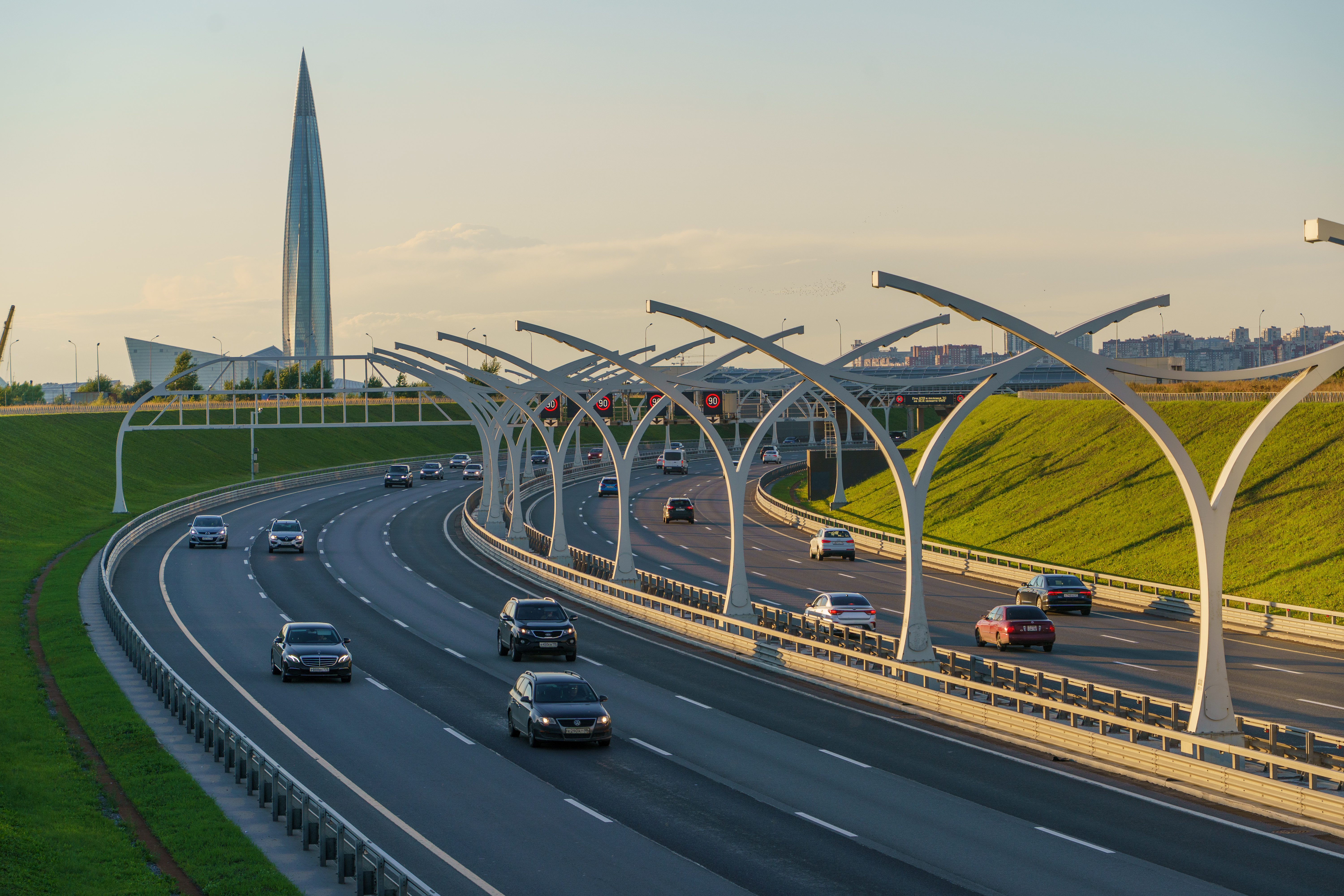
2025 marked the 20th anniversary of the start of construction of the Western High-Speed Diameter (WSD). Traffic along the entire length of the ZSD was launched in 2016, while the development of a key element of St. Petersburg's high-speed transport infrastructure continues.
In 2019, an interchange was opened at the intersection with a New Highway, in 2021, an interchange with Shuvalovsky Prospekt, in 2023, traffic began on the first launch complex of the ZSD transport interchange in the area of Skipersky Protok Street, and in 2024, on the Vitebsk ZSD interchange, the first stage of the Latitudinal Highway.
The construction of the ZSD is a project of incredible scale: up to 5,500 people worked simultaneously at the central site alone. About 2.4 million square meters of asphalt were laid on the 46.6 km long highway, 350 thousand tons of metal structures were used. Artificial structures – bridges and overpasses – account for 26.7 kilometers, that is, more than half of the length of the highway. As part of the project, the tallest bridge in St. Petersburg was created - a two–tiered bridge over a Sea Canal with a navigable size of 52 meters. By the way, the best bridge builders in the world came to see his most difficult installation. The second tallest bridge in the city is also located on the Western High–speed Diameter - it is a cable-stayed bridge over the Ship Fairway, which has become the only cable-stayed bridge in the world with pylons inclined to the riverbed span.
Thanks to the new motorway, the transport impact on historical sites in the central part of the city has been reduced, and round-the-clock communication between the northern, central and southern districts of the city has been provided. Through the 5.5 million megacity, it is possible to drive from Ring Road to ring Road in less than 20 minutes, up to 20% of traffic from the Ring Road, up to 40% of traffic from Vasilyevsky Island, up to 15% in the southern regions and the same amount in the Primorsky district are redirected to the Ring Road. Even those drivers who do not use the highway felt the impact: 5 minutes is the average amount of time saved in each car trip in our city due to the launch of the ZSD.
Up to 300,000 trips per day are made on the WSD, while drivers save about 75,000 liters of fuel, and carbon dioxide emissions are reduced by 170 tons daily. Over the years, the highway has been traveled hundreds of millions of times, traffic is constantly growing, and in the coming years, a billion-dollar trip will be recorded.
Modern expressways not only save time and increase driver comfort, but also have significant economic benefits. For example, due to the creation of ZSD, the total increase in jobs, according to experts, amounted to 33 thousand people, and the demand for real estate in the areas of attraction of the highway increased by 15-20% due to improved transport accessibility.
Another important aspect is safety, which is an absolute priority in the operation of the WSD. According to statistics, the St. Petersburg highway is one of the safest in the country. In 2024 and the past period of 2025, not a single fatal accident occurred on it. This year, compared to last year, the number of accidents decreased by 13%, the number of accidents with victims decreased by almost half.
Along with the ZSD and Ring Road, the new stages of the CMMSD will become links in a single modern transport framework of urban highways of high-speed and continuous traffic, which will bring transit traffic flows out of the city center.