
The testing of the second stage of the Slavyanka tram line has begun.
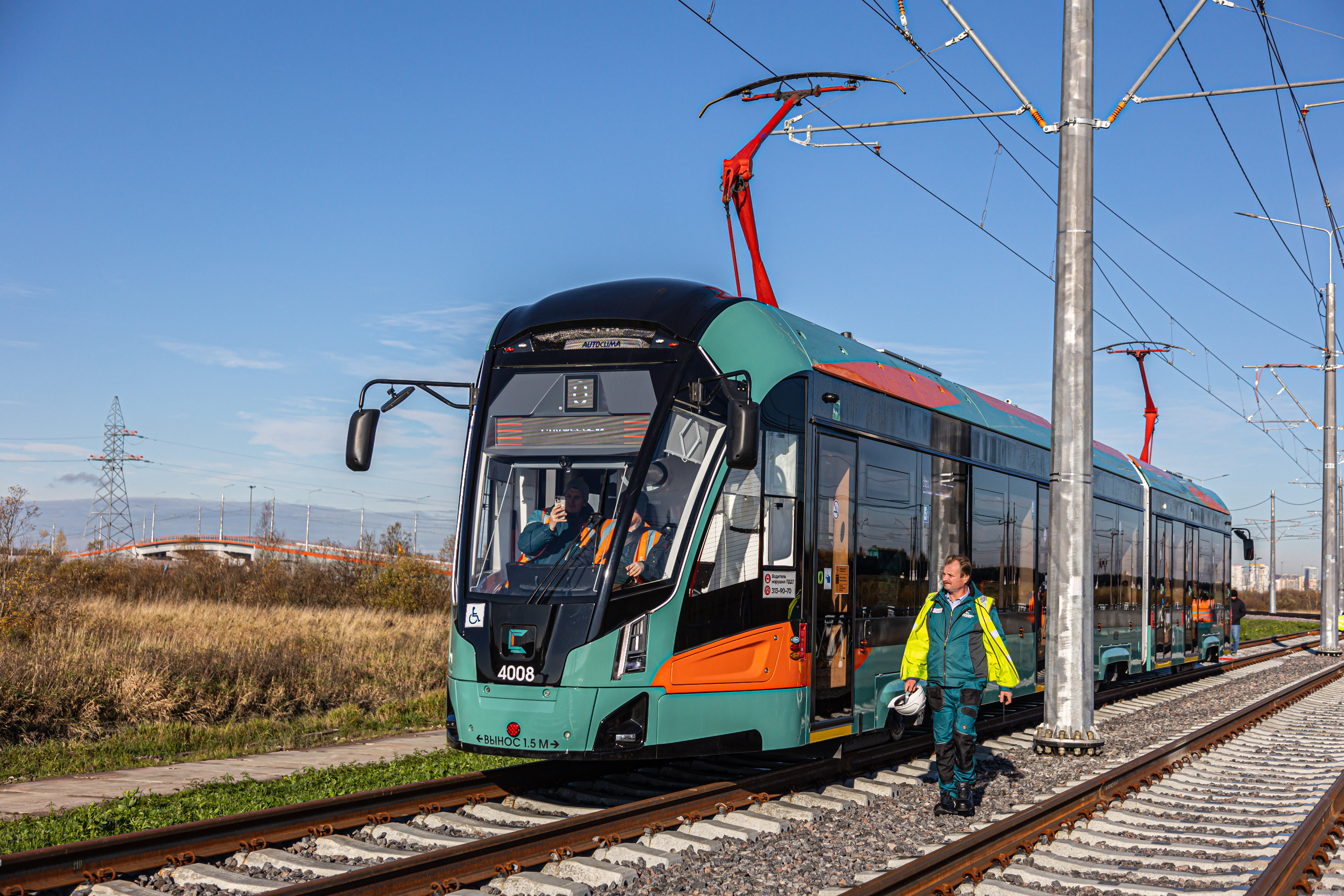
Specialists from the company “Baltnedvizhsservis” — the concessionaire for the project to build and operate the “Slavyanka” tram network in the Pushkinsky District of St. Petersburg — have begun testing the second stage of the line, from the depot on Novgorodsky Prospekt to the technological maintenance point in the Slavyanka microdistrict. The testing is carried out without passengers as part of the technological process of preparing the line for commissioning.
“Testing is the final and most important check of all systems before the trams start carrying passengers. We must be confident in the flawless operation of the new tram line.” The plans remain unchanged — to launch the second phase of “Slavyanka” by the end of December 2026. The start of traffic on this section will be an important step in the development of the city’s transport system. We are creating a modern, comfortable, and eco‑friendly alternative to driving a car for residents of dynamically developing areas,” Governor Alexander Beglov noted.
During the run‑in period, which will last about a month, engineering services will test the system for interaction between the pantograph and the overhead contact network along the entire route, switch points, the operation of the track under load, the functioning of communication, power supply and lighting systems, and the traction and energy characteristics of the rolling stock in various modes.
The run‑in is carried out in stages — first at low speeds, then with a gradual increase to operational speeds. Based on the results, a report is drawn up confirming the line’s readiness for operation.
In parallel, commissioning work is underway: configuring traction substations, integrating traffic management systems, connecting information displays, video surveillance systems, lighting, and alert systems at the stop pavilions, as well as checking the operation of the depot and infrastructure.
By the time the line is launched in December 2026, construction and installation work on all sections of the second stage will be completed, including the improvement of the adjacent territory. The preparation also includes synchronizing work with power supply services, conducting comprehensive tests of the entire “line — rolling stock — dispatch control” system, and obtaining permission to transport passengers.
At the same time, extensive documentation work is underway to obtain all the necessary conclusions, protocols, and acts in accordance with the requirements of the law and the concession agreement.