
A working bridge for the construction of the SCHMSD ferry began to be built on the Neva River
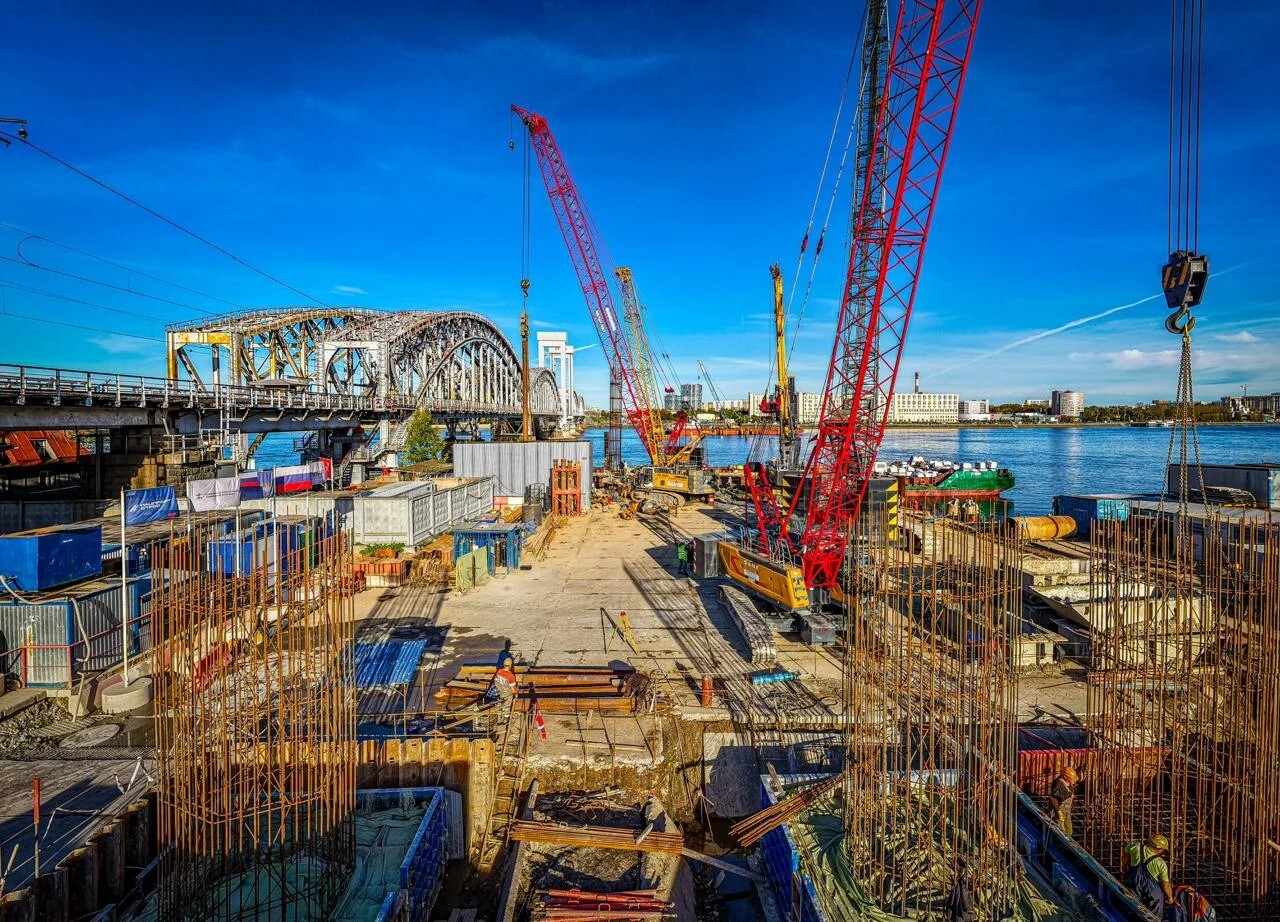
During the construction of the drawbridge across the Neva River as part of the Latitudinal High-speed Highway (SHMSD), specialists from the general contracting company JSC DiM (part of the National Project Construction) began to build an auxiliary working bridge on the left bank.
"The Latitudinal highway is a strategic project for St. Petersburg and the whole of Russia. It is being implemented as part of the first priority of urban development "Megaprojects of the 21st century". The President of Russia attaches special importance to the highway. It will become part of the modern transport framework of the country, connect St. Petersburg with the highways of the Leningrad region and help relieve the city of transit traffic. Together with the Ring Road, the Western High-speed Diameter and the future Ring Road -2, the SCHMSD will ensure continuous high-speed traffic. In the summer, on the fields of SPIEF 2026, we laid a stone at the construction site of a drawbridge as part of the Latitudinal Highway. Now a new important stage has begun - the construction of an auxiliary working bridge," said Alexander Beglov, Governor of St. Petersburg.
A working bridge is a temporary structure through which heavy machinery can drive up to the construction site of the main structures. Another function of the working bridge is to protect the construction site of permanent supports from ice drift. The same technology was used by the contractor on the Bolshoy Smolensky Bridge under construction.
For the construction of an auxiliary working bridge, hollow steel pipe piles are first installed in the river bottom by vibration immersion, and then standard sections of the superstructure are mounted on them. On wide rivers, such bridges are usually built from two banks and do not connect to each other in order to leave a navigable channel free.
"The working bridge is, in fact, a temporary road to the water area. So far, it looks like a narrow technological overpass, but it is from there that all the most difficult things will begin: the installation of pile foundations and the construction of supports. Each channel support is a separate engineering task. The builders will have to work in the Neva riverbed, where the depth reaches up to 20 meters, and the ship's passage passes nearby. Every detail is important here: from the precision of sinking piles to the synchronization of work with shipping," said Mikhail Fokin, Director of Construction at the Northern Capital Latitudinal Highway concessionaire.
The construction of the main structures of the SCHMSD bridge has already begun: specialists have begun to sink the tongue-and-groove fence on the extreme left bank support. A foundation pit will appear inside this fence, where the installation of drilling piles for the foundation of the support will soon begin.
The construction of the SCHMSD bridge across the Neva River is included in stage 4.1, which is the most difficult from a technical point of view. The builders will have to build 1,170 drilling piles, lay 160,000 cubic meters of concrete and assemble 16,000 tons of metal structures.