
In St. Petersburg, the grounds for the targeted allocation of plots for the construction of waste disposal facilities are being established.
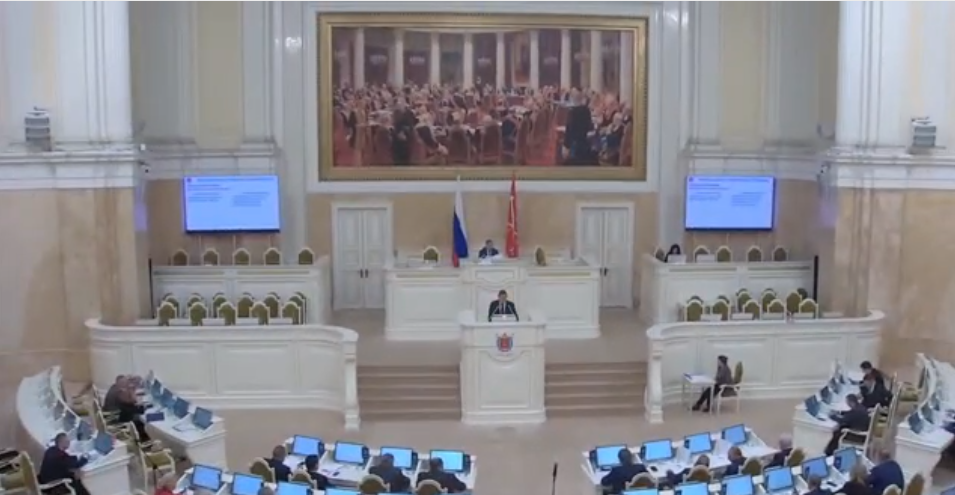
Today, at a meeting of the St. Petersburg parliament, a draft law was unanimously adopted in the first reading. The draft law establishes the grounds for the targeted provision of land plots for the placement of waste processing and disposal facilities. The document was developed by the St. Petersburg Investment Committee in order to increase investors’ interest in implementing projects to develop a system for the efficient management of production and consumption waste.
The draft law supplements the St. Petersburg law “On the Procedure for Granting Real Estate Objects Owned by St. Petersburg for Construction, Reconstruction, and Adaptation for Modern Use” with a criterion under which the targeted creation of a disposal facility must be provided for in the Territorial Scheme for the Management of Production and Consumption Waste in St. Petersburg.
During the meeting, it was noted that the national project “Environmental Well‑being,” approved by a decree of the President of the Russian Federation, envisages the formation of a circular economy by 2030, including sorting 100 % of the volume of waste generated annually, disposing of no more than 50 % of the waste, and involving at least 25 % of the waste in economic circulation as secondary raw materials.
“Achieving this goal is impossible without creating modern waste processing capacities and infrastructure. At the same time, waste disposal projects are characterized by a high level of costs for investors, who are mostly small businesses.” “The targeted allocation of plots for the construction of such facilities will become an additional measure of state support for the development of a strategically important industry,” noted Ivan Skladchikov, Chairman of the St. Petersburg Investment Committee.
To date, using the mechanism proposed in the draft law, plants can be established for the production of foam glass aggregate, the processing of used textile products and secondary plastics, and the composting of wastewater sludge.
The document will be further discussed in parliament, in the second and third readings. The adoption of amendments to the legislation will help reduce the timeframes and simplify the procedure for implementing investment projects in the field of waste management.